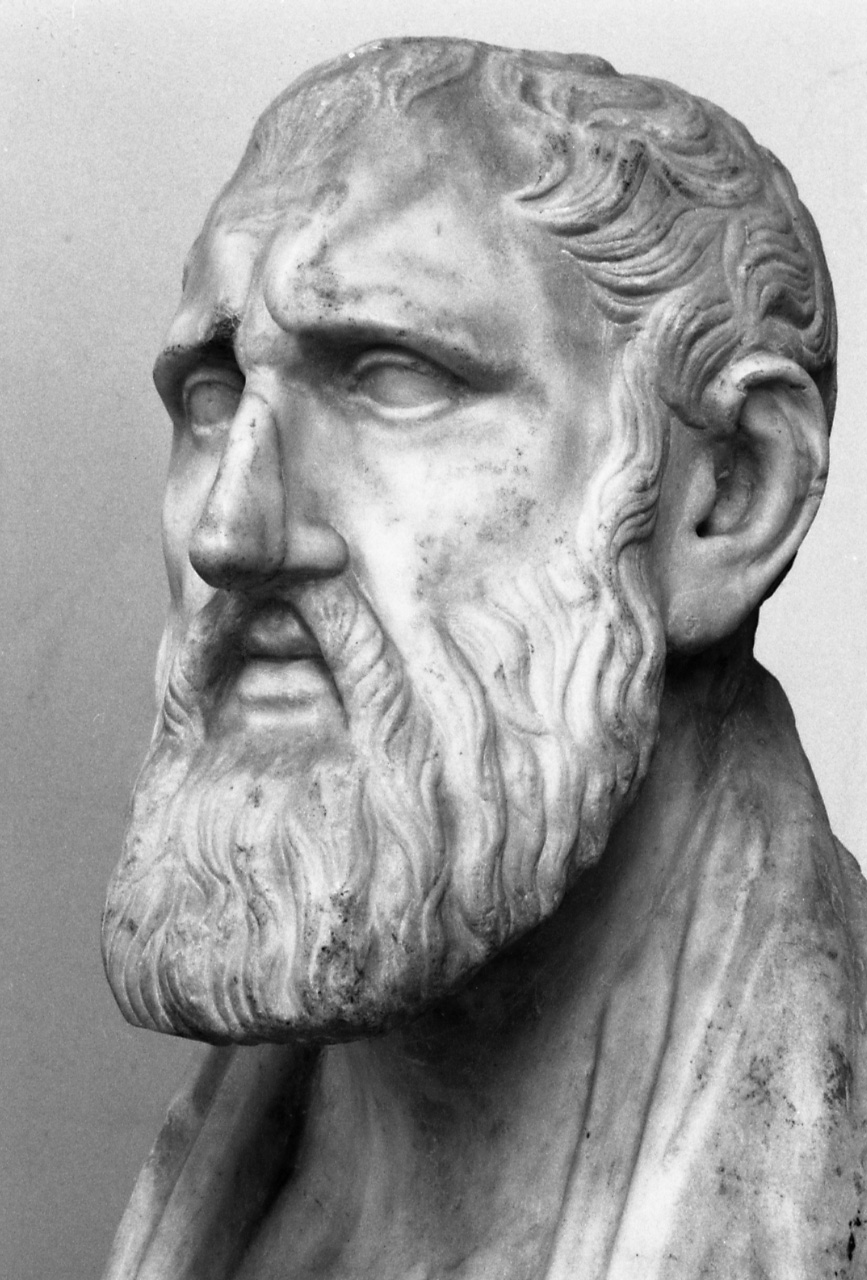
Zeno of Citium (/ˈziːnoʊ/; Koine Greek: Ζήνων ὁ Κιτιεύς, Zēnōn ho Kitieus; c. 334 – c. 262 BC) was a Hellenistic philosopher from Citium (Κίτιον, Kition), Cyprus.[3] He was the founder of the Stoic school of philosophy, which he taught in Athens from about 300 BC.
Based on the moral ideas of the Cynics, Stoicism laid great emphasis on goodness and peace of mind gained from living a life of virtue in accordance with nature. It proved very popular, and flourished as one of the major schools of philosophy from the Hellenistic period through to the Roman era, and enjoyed revivals in the Renaissance as Neostoicism and in the current era as Modern Stoicism.
None of Zeno's original writings have survived except as fragmentary quotations preserved by later writers. The most famous of his works was his Republic, written in conscious imitation of, or opposition to, Plato's Republic. Although it has not survived, more is known about it than any of his other works. It outlined Zeno's vision of the ideal Stoic society.
A manuscript that was attributed to Zeno, matching a known title of one of Zeno's works, Περὶ φύσεως (On Nature), was discovered in 1949 in an Old Armenian translation. In 1956 it was translated into Russian and published with an extensive commentary.[81] Subsequent philological investigation concluded that the author could not have been Zeno and was instead an anonymous Christian philosopher of the late sixth century or a little later, writing in the tradition of ancient philosophy, but doing so as a Christian. He is now known as Pseudo-Zeno. His work shows an integration of Christian and philosophical concepts, but in a very restrained way.[82]